

NDS® DRAINAGE & STORMWATER SOLUTIONS
Why Choose Impact Landscaping as Your NDS® Certified Contractor
Impact Landscaping is an NDS® Certified Contractor, meaning our drainage systems are designed and installed using manufacturer-approved methods, professional-grade materials, and real-world performance standards. Certification is not a label, it is accountability. We understand how NDS components function together as a system, not as individual parts, and we install them with correct slope, intake placement, and controlled discharge. Every drainage solution is owner-led, engineered for coastal rainfall, and built to perform long after the next storm rather than simply passing the first one.
Our Approach
Drainage is not a product, it is a system. Every installation is owner-led from consultation to completion, sized for real rainfall events, built with NDS® professional-grade materials, and designed for long-term performance. We do not install shortcuts or temporary fixes. We build drainage systems that work.
Turnin’ Dirt to Dreams by moving water where it belongs.
Engineered Drainage Solutions Built for Coastal Rainfall
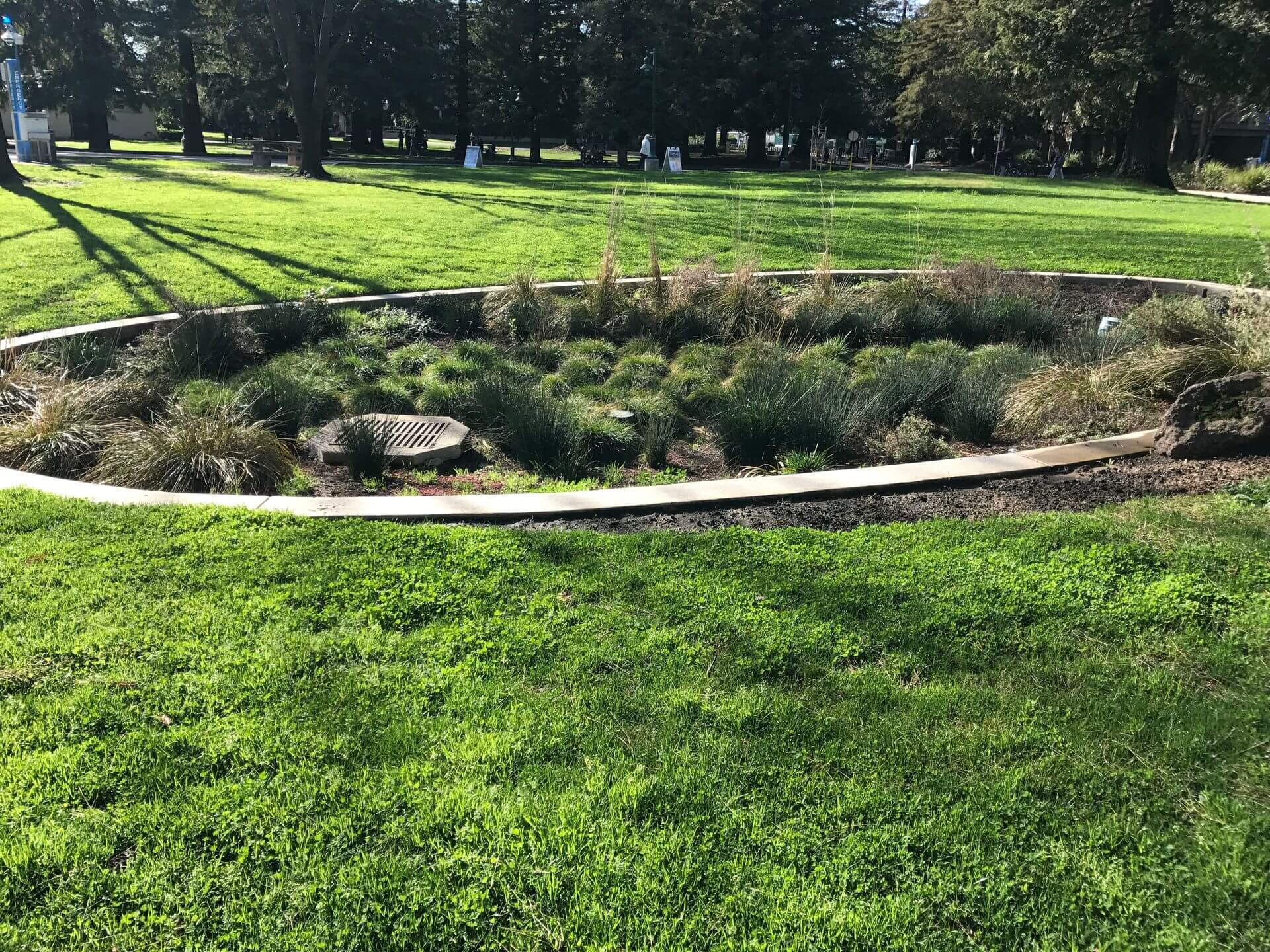
Water problems show up in many forms, but the cause is always the same: water has nowhere reliable to go. Impact Landscaping designs and installs integrated NDS® drainage and stormwater BMP systems that capture, move, slow, and discharge water correctly. The goal is not to hide water temporarily but to manage it permanently so your property stays usable, stable, and protected.Downspout Immersion Drains
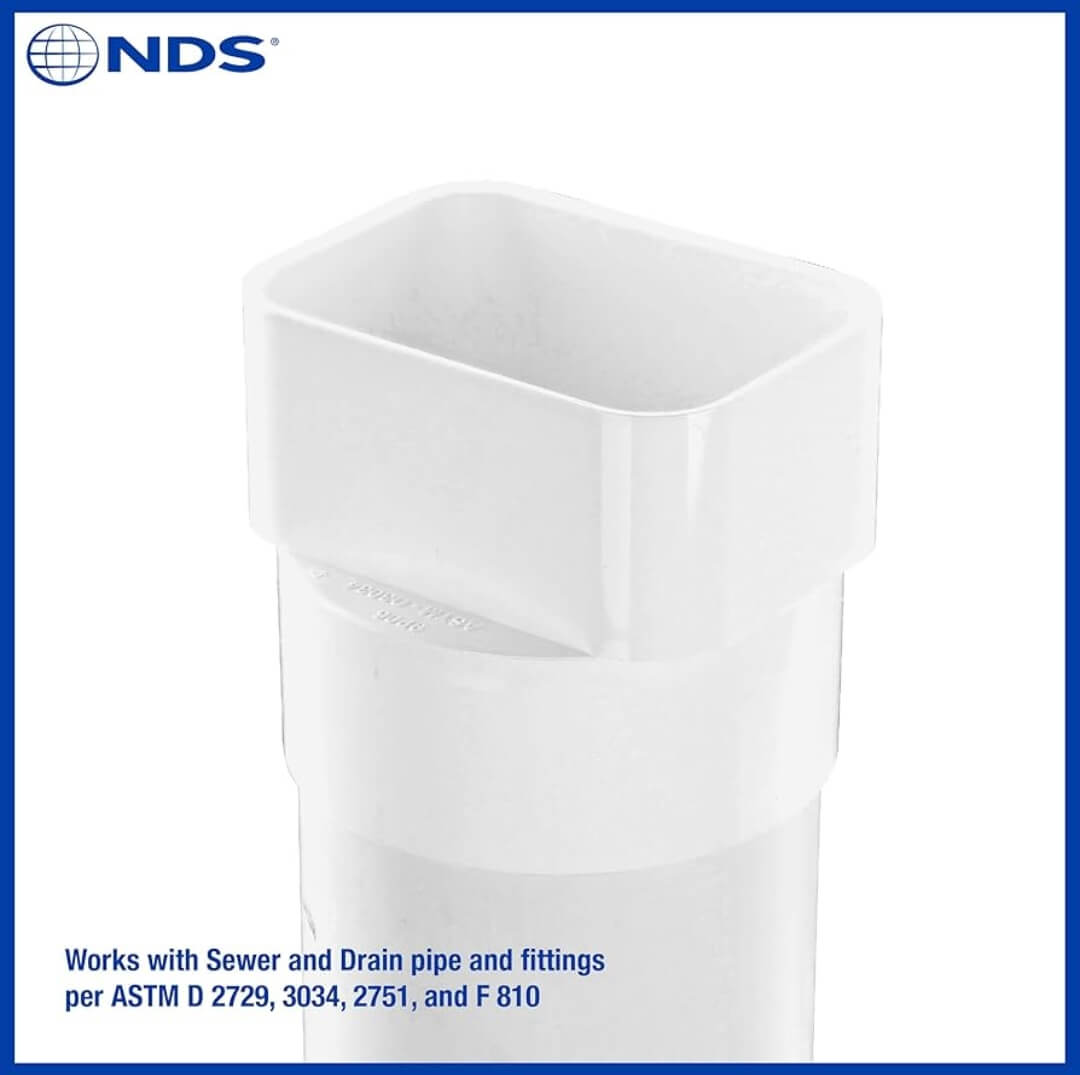
Roof runoff concentrates thousands of gallons of water directly at the foundation, walkways, and planting beds, often causing pooling, erosion, and long-term moisture issues. We solve this by installing downspout immersion drains that capture water at the source and move it underground. Downspouts are tied into sealed NDS inlets and transitioned into solid underground piping, allowing water to bypass surface areas entirely and discharge safely away from the structure. This protects foundations, eliminates washed-out beds, and removes one of the largest contributors to residential flooding.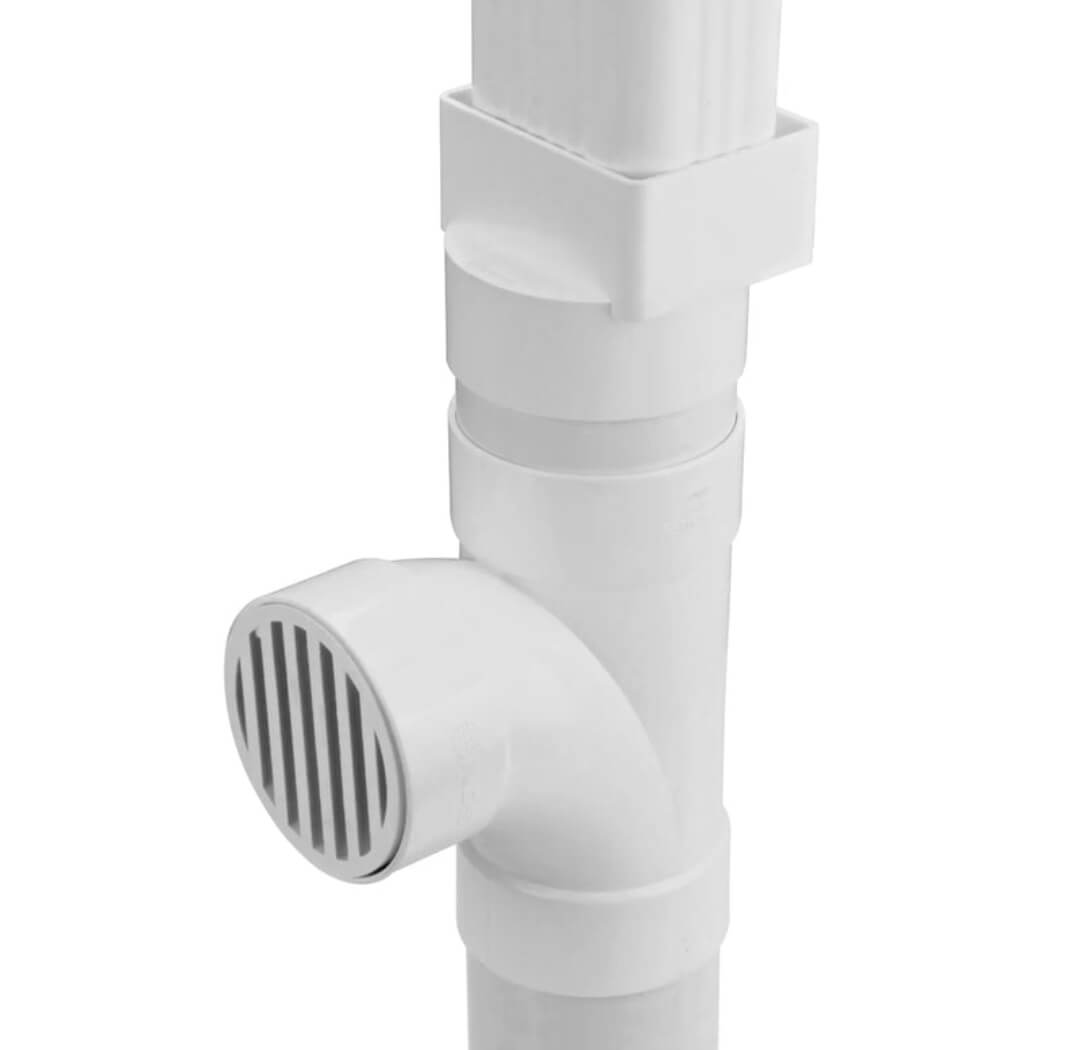
Gravel-Free French Drain Systems
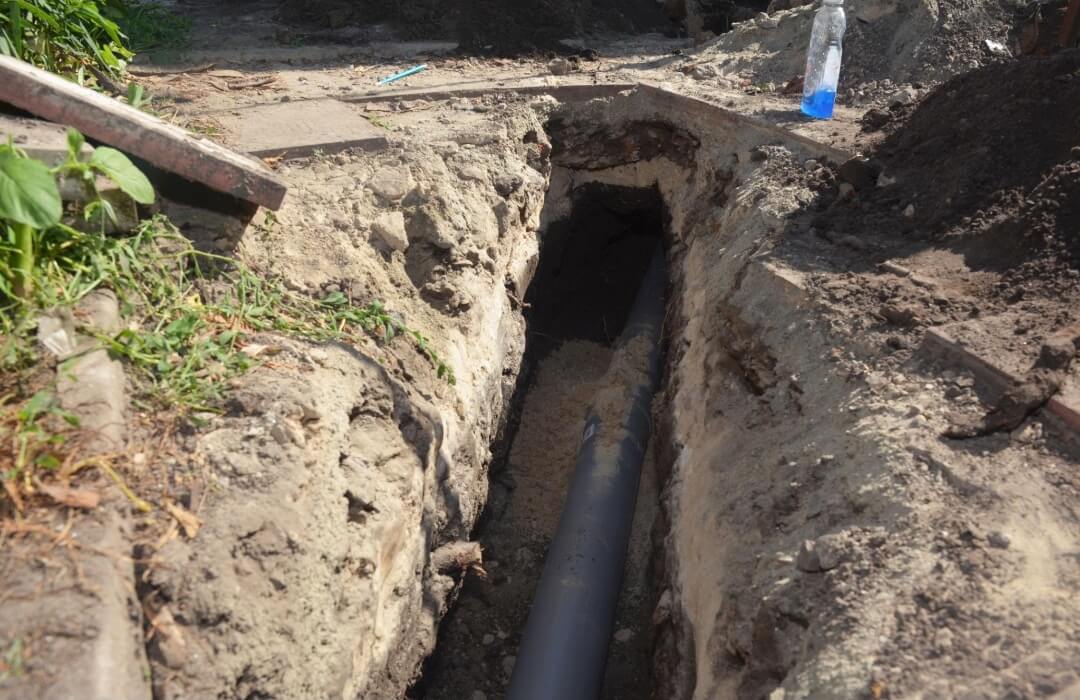
Muddy lawns, failing turf, and lingering saturation occur when groundwater cannot drain fast enough through compacted or poorly draining soils. Traditional gravel French drains often clog or lose capacity over time, leading to repeat failures. We install gravel-free French drain systems that maintain consistent flow while filtering sediment. Perforated piping wrapped in engineered filtration fabric intercepts subsurface water evenly, allowing it to flow freely through the system and discharge without relying on gravel that traps fines or collapses over time. The result is a cleaner installation, faster drainage, and long-term reliability.Surface Drains and Collection Basins
Standing water forms in low areas, between structures, or along hardscapes when there is no defined intake point. Instead of allowing water to spread across the surface, we install NDS surface drains, atrium grates, and collection basins exactly where water naturally pools. These inlets capture water at grade and immediately transition it into underground piping, preventing saturation and directing flow into the drainage system where it belongs.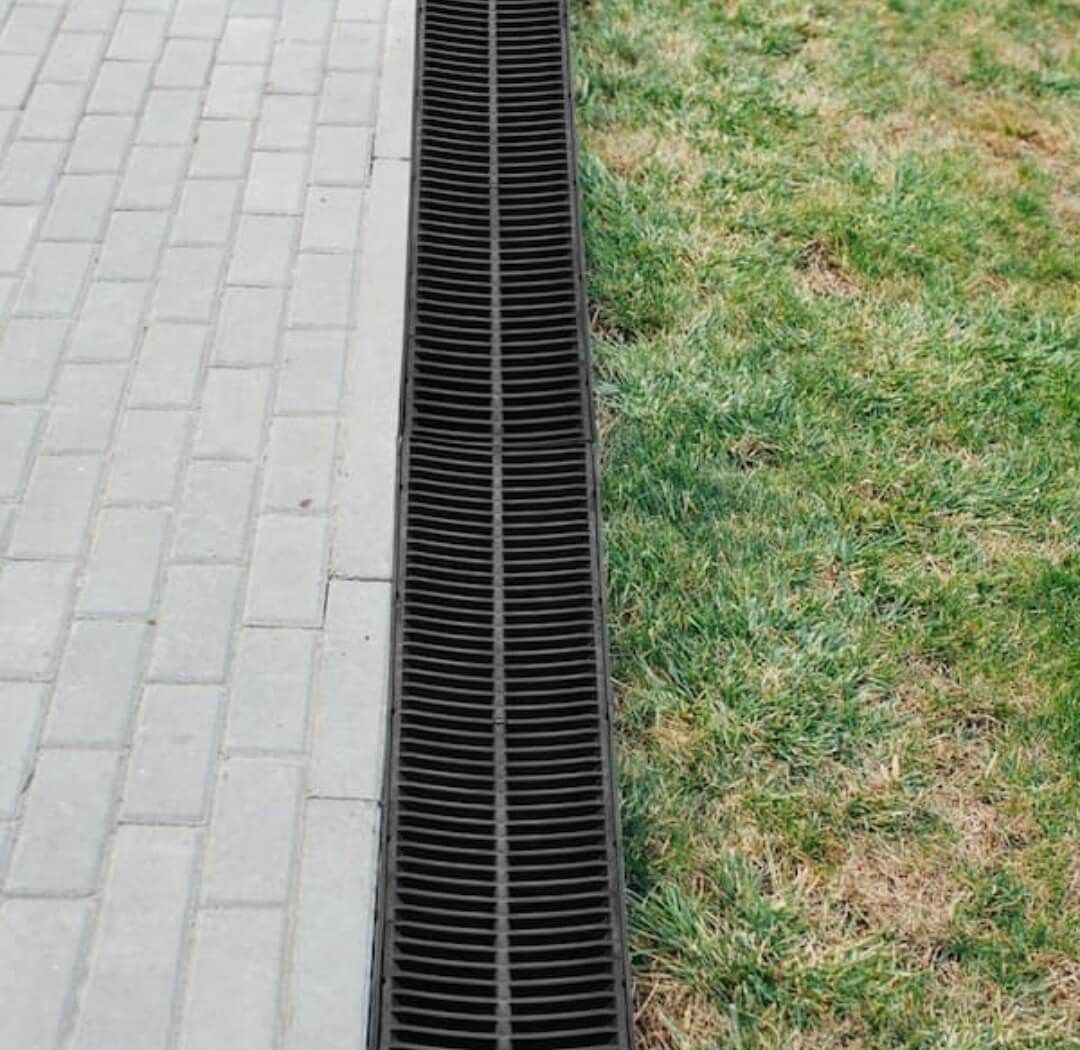
Channel Drains for Driveways and Garage Entrances
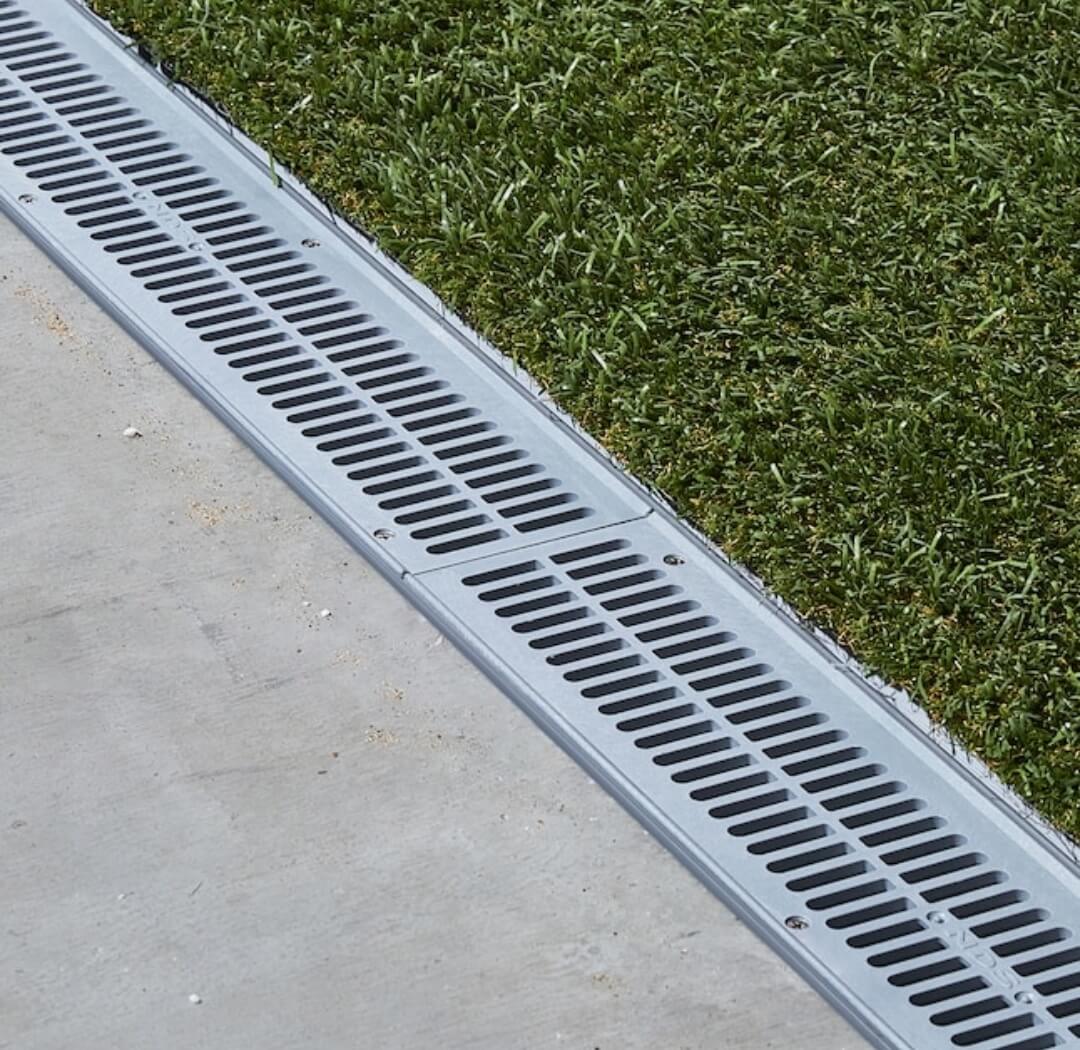
Water entering a garage or collecting at the edge of a driveway is both a safety issue and a structural problem. This is commonly caused by hard surfaces directing water toward the building with no interception point. We install linear channel drain systems designed to sit flush with the driveway surface and intercept water before it reaches the garage. Installation typically involves cutting a narrow section at the front of the driveway and setting a heavy-duty channel drain connected to the underground drainage system. Water is captured across the entire opening and carried away, preventing flooding, ice buildup, and long-term concrete damage.Pop-Up Emitters and Controlled Discharge
Every drainage system depends on a reliable outlet. Poor discharge causes erosion, backflow, or water resurfacing near the problem area. We use NDS pop-up emitters to release water gradually and safely at designated discharge points. As water flows through the system, pressure opens the emitter cap and releases water evenly. When flow stops, the cap closes, keeping debris out and maintaining system performance.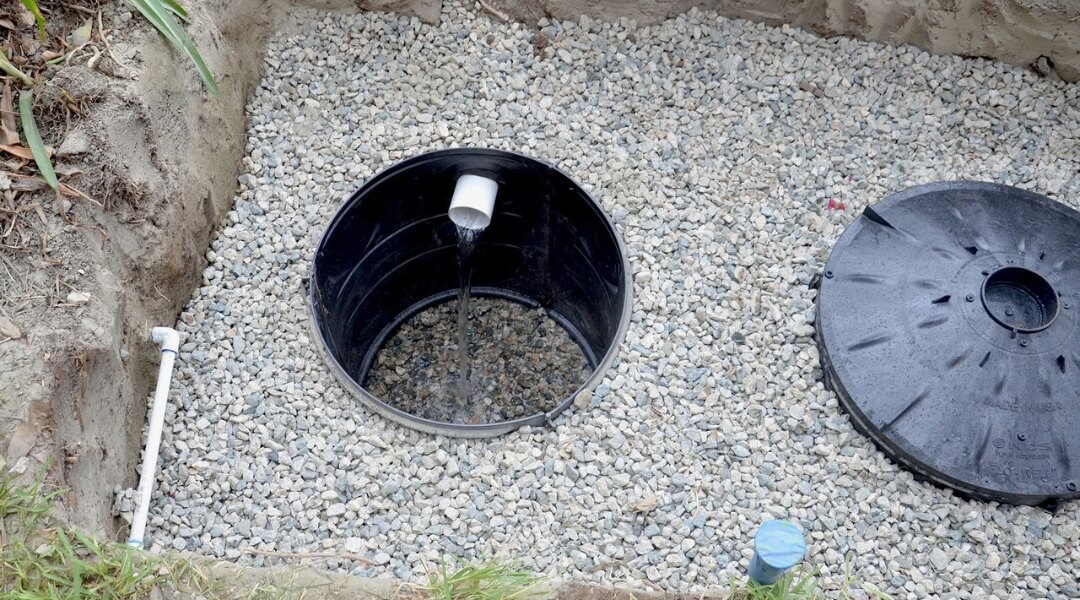
Solid Pipe Conveyance and Transitions
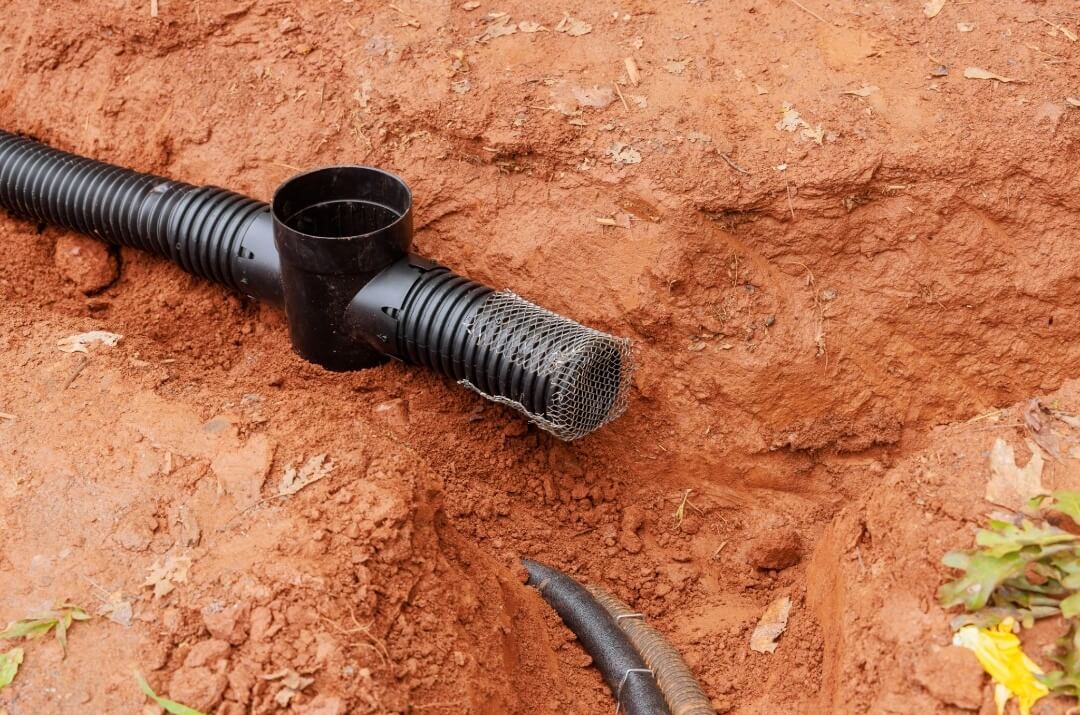
Drainage systems fail when water cannot move fast enough during heavy rainfall. In areas where volume and speed matter, we use solid pipe combined with NDS-certified fittings and transitions. Solid pipe accelerates flow through long or critical runs, while perforated or corrugated sections handle collection. This balanced approach maximizes capacity, reduces sediment buildup, and improves overall system performance.Integrated Grading and Flow Correction
Even the best drainage system will underperform if water cannot reach it. Poor grading causes water to fight gravity instead of flowing into collection points. When needed, we incorporate minor regrading and flow correction to guide water naturally toward drains. These subtle adjustments allow the underground system to function efficiently without surface runoff or erosion.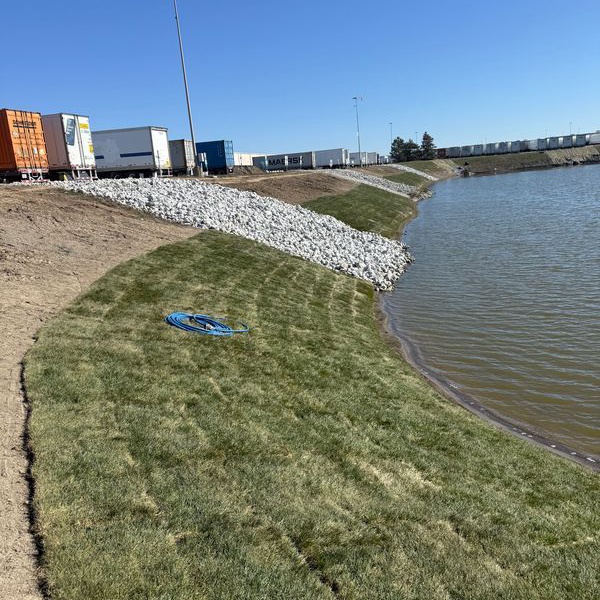
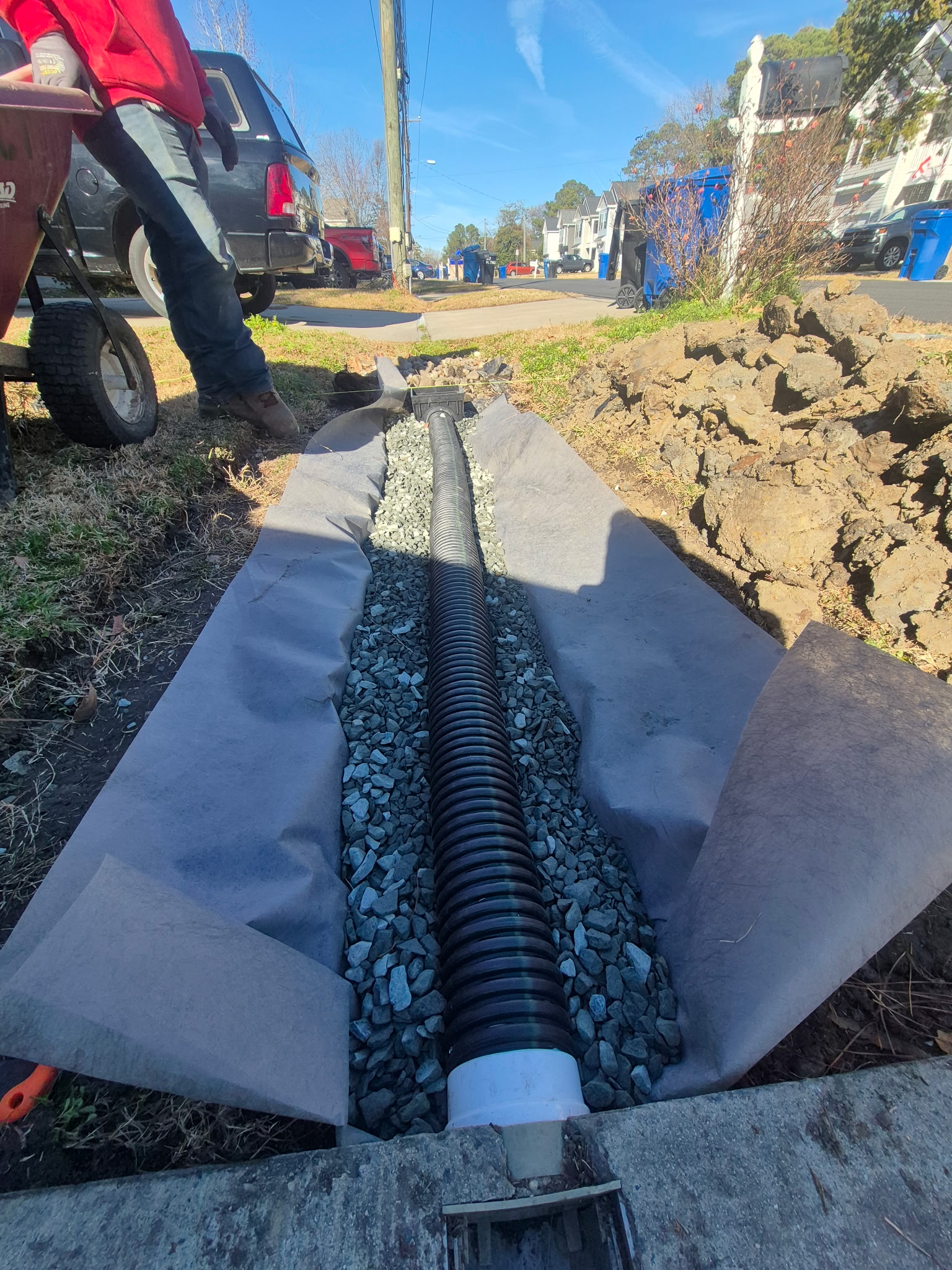
Whole-Property Drainage Systems
Most water problems are not isolated to one spot. They are the result of multiple contributing factors working against each other across the property. We design whole-property drainage systems that combine downspout immersion drains, surface inlets, French drains, channel drains, solid conveyance piping, BMP components, and controlled discharge into a single integrated solution. By managing water from collection to discharge as one system, we eliminate recurring issues and create consistent performance across the entire property rather than fixing the same problem repeatedly in different locations.Stormwater BMP Installation
In areas with heavier runoff, limited space, or environmental considerations, basic drainage alone is not enough. We design and install stormwater BMPs that control, slow, and manage runoff responsibly. These systems use NDS collection structures, underground conveyance, infiltration zones, and flow-regulating outlets to reduce erosion and downstream impact. BMPs are integrated into lawns, planting beds, and hardscapes so performance is achieved without sacrificing usable space.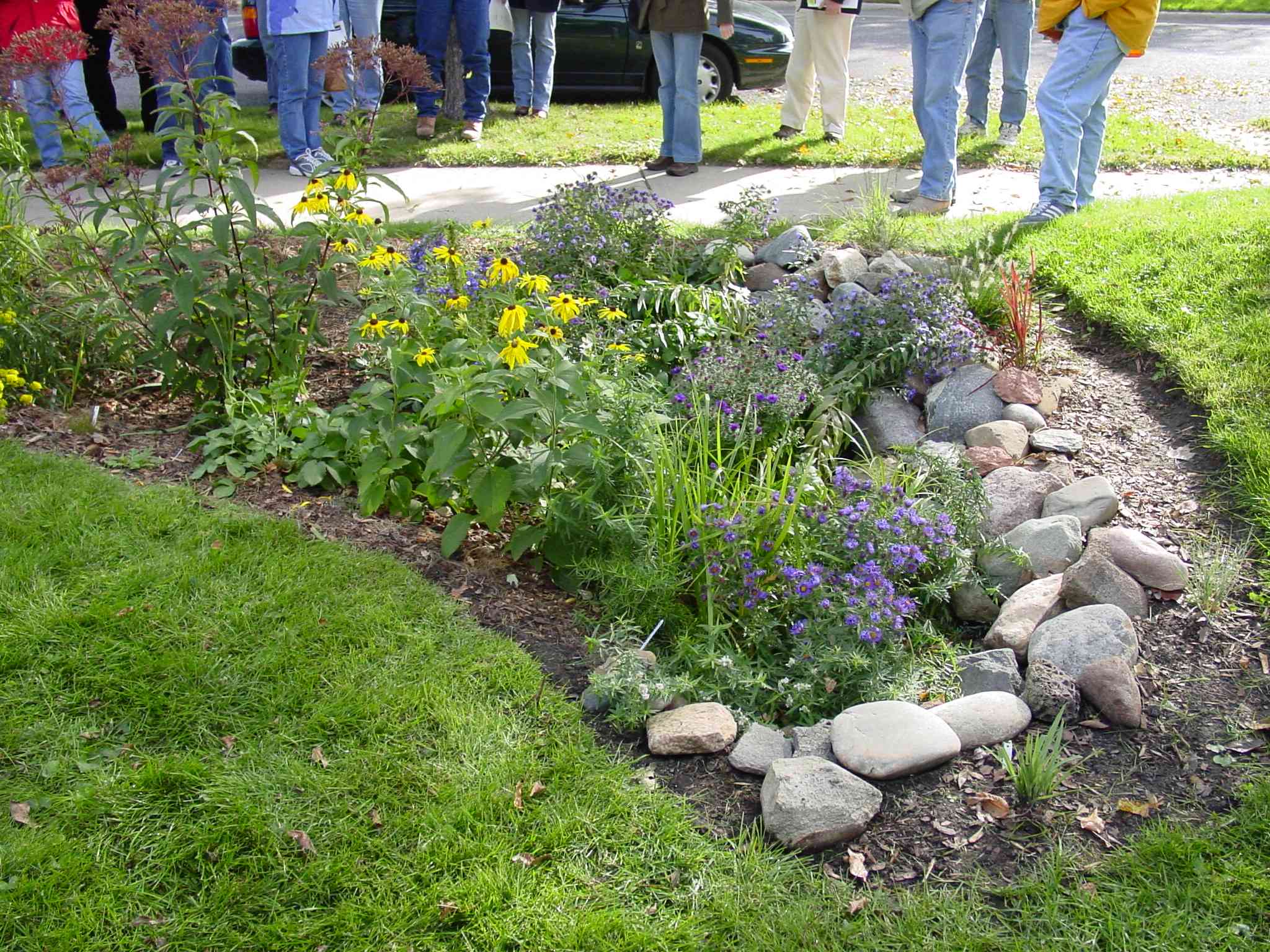
NDS Drainage Solutions
What does it mean to be an NDS® Certified Contractor?
How do I know if I need drainage installed?
What causes standing water in yards?
Are drainage problems common in coastal Virginia?
What is a gravel-free French drain?
Why not use traditional gravel French drains?
Can drainage fix a constantly muddy lawn?
What are downspout immersion drains?
Why is roof runoff such a big problem?
Where does the water go after it enters the system?
What is a pop-up emitter?
Will drainage cause erosion at the outlet?
What are surface drains and collection basins?
What is a channel drain?
Why would I need a channel drain at my garage?
Does installing a channel drain require cutting concrete?
What is solid pipe used for in drainage systems?
Do drainage systems need proper grading?
Can drainage be installed under existing landscaping?
How long does drainage installation take?
What are stormwater BMPs?
When are BMPs necessary instead of basic drainage?
Are BMPs only for commercial properties?
Will BMP systems be visible?
Can drainage systems clog over time?
What maintenance is required?
Can drainage be combined with lawn or sod installation?
How much rainfall can these systems handle?
Is drainage a permanent solution?
How do I get started?
CONTACT US
Location
All areas within Virginia Beach, Chesapeake, and Norfolk. For large installations we will service areas as far away as James City County, Moyock, and Suffolk.
Business Hours
Mon: 7:00 AM – 6:00 PM
Tue: 7:00 AM – 6:00 PM
Wed: 7:00 AM – 6:00 PM
Thu: 7:00 AM – 6:00 PM
Fri: 7:00 AM – 6:00 PM
Sat: 9:00 AM – 6:00 PM
Sun: 8:30 AM – 5:00 PM
© 2024 Impact Landscaping | Terms of Service